 Malunggay Compass
Leaf composition
Fresh moringa leaves are roughly 75–80% water. Dry them, and the remaining leaf powder is one of the most nutrient-dense plant materials routinely eaten by humans — about a quarter of it is protein.
| Component (per 100 g dry leaf powder) | Typical range | Context |
|---|---|---|
| Protein | 25–30 g | Unusually high for a leaf; contains all essential amino acids in useful amounts |
| Carbohydrates | 35–45 g | Much as fiber |
| Fat | 5–10 g | Mostly unsaturated |
| Fiber | 12–20 g | Contributes satiety and gut function |
| Calcium | 800–2,000 mg | High, though bioavailability is moderated by oxalates |
| Iron | 15–40 mg | Non-heme iron; absorption improves with vitamin C |
| Potassium | 1,300–2,000 mg | Comparable to or above banana on a dry-weight basis |
| Vitamin A (as β-carotene) | 15–40 mg β-carotene equiv. | Retention depends strongly on drying method |
| Vitamin C | 50–300 mg (varies hugely) | Degraded by heat and long drying; fresh leaves far richer |
| Vitamin E, B-vitamins | Present | Meaningful amounts of riboflavin, B6, folate |
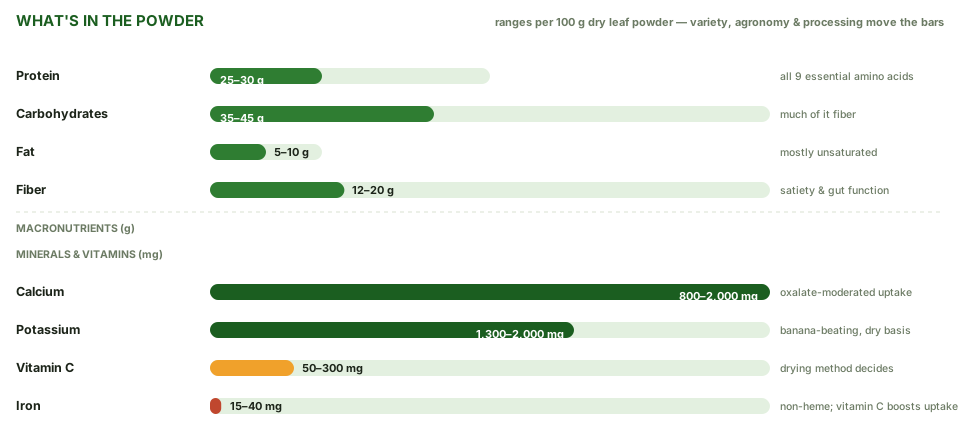
Viral posts claim gram-for-gram moringa beats oranges in vitamin C or milk in calcium. These comparisons are real on a dry-weight basis but misleading as nutrition advice: nobody eats 100 g of powder a day. A realistic serving is 1–2 tablespoons (~5–10 g).
Fresh leaves vs. powder
| Attribute | Fresh leaves | Dried powder |
|---|---|---|
| Water content | ~75–80% | ≤ 7% for shelf-stable powder |
| Vitamin C | High (150–250+ mg/100 g) | Greatly reduced; varies with drying temp |
| Protein & minerals | Good per 100 g fresh | Concentrated per 100 g dry |
| Culinary role | Vegetable in soups and stews | Ingredient/supplement: smoothies, soups, baked goods, tea |
| Shelf life | 2–5 days chilled | 6–12+ months sealed, cool, dark |
| Commercial value | Low–moderate (₱/kg fresh) | Multiples of fresh-leaf value per kg |
This value multiplication is why processing is the pivotal step in the moringa value chain.
Pods, seeds and flowers
- Tender pods (drumsticks): modest calories, fiber, vitamin C; eaten as a cooked vegetable. In Filipino markets, a seasonal item rather than a daily one.
- Mature seeds: 30–40% oil (ben oil) and 40%+ protein in the kernel; not eaten raw in quantity — they taste pungent-bitter. Used for oil, seed-for-sowing, and water coagulant.
- Flowers: used for teas and seasonal dishes; a nectar source supporting honey production.
Bioactive compounds
Beyond conventional nutrients, moringa leaves contain a chemist's portfolio of secondary metabolites:
- Glucosinolates / isothiocyanates — notably 4-(α-L-rhamnopyranosyloxy)benzyl isothiocyanate (moringin), studied for antimicrobial and anti-inflammatory activity.
- Flavonoids & phenolic acids — quercetin and kaempferol glycosides, chlorogenic and caffeic acids; antioxidant capacity in assays.
- Saponins, tannins, phytates — bioactive but also antinutritional at high intakes; ordinary cooking and processing reduce them.
- Zeatin — a plant cytokinin present in leaves, cited in anti-aging marketing; human relevance unproven.
- Moringa seed proteins — cationic peptides that clump bacteria and silt — the basis of the seed's water-purification use (see Processing).
Amino acid profile
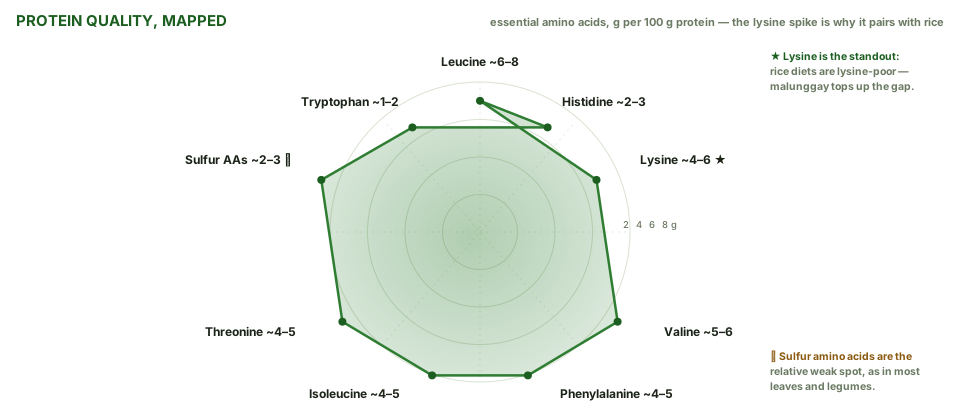
Leaf protein quality is where moringa genuinely stands out among plant foods: its protein contains all nine essential amino acids in useful proportions — rare for a leafy vegetable and the biochemical basis of its use against child malnutrition.
| Essential amino acid | Approx. content (g/100 g protein) | Note |
|---|---|---|
| Leucine | ~6–8 | Largest fraction; key for protein synthesis |
| Lysine | ~4–6 | Notably good for a leaf — complements grain-heavy diets (rice is lysine-poor) |
| Valine | ~5–6 | — |
| Phenylalanine | ~4–5 | — |
| Isoleucine | ~4–5 | — |
| Threonine | ~4–5 | — |
| Methionine + cysteine (sulfur AAs) | ~2–3 | The relative weak spot, as in most legumes and leaves |
| Tryptophan | ~1–2 | — |
| Histidine | ~2–3 | Essential for infants |
Feeding programs and food aid
Malunggay's most defensible health claim is also its oldest: it feeds hungry people well. Philippine LGUs, NGOs, and school feeding programs use it in three practical modes:
- Fresh-leaf mode: soups (tinola, law-uy) built with community-grown leaves — zero ingredient cost, high familiarity, no consumer education needed.
- Fortified mode: powder blended into porridges (lugaw), pansit, and pandesal at 3–5% — gram-measured, season-proof, and consistent batch to batch.
- Supplement mode: measured daily powder servings (¼–1 tsp for young children) in supervised nutrition programs; LGU nutrition action offices commonly anchor this mode.
For program designers, the economics are as compelling as the nutrition: at typical farmgate prices, a daily 5 g powder serving costs well under ₱1 — among the cheapest micronutrient interventions available, with the added benefit that procurement can be sourced from local moringa farmers rather than importers. (Program supply models: market channels; processing requirements: powder quality standards.)
Health evidence — an honest summary
Reasonably supported
- Nutritional contribution: as a food, moringa leaves genuinely contribute protein, iron, calcium, and provitamin A — hence decades of use against child malnutrition in the tropics.
- Blood glucose: multiple small randomized trials and meta-analyses report modest post-meal glucose lowering with leaf powder (typically a few grams/day) in type-2 diabetics. Effects are real but small; moringa is not a diabetes treatment.
- Cholesterol & lipids: some trials show modest LDL reductions; animal data are stronger than human data.
- Antioxidant/inflammatory markers: shifts in biomarkers are reported; clinical significance remains open.
Weak, mixed, or unproven
- “Cures” for specific diseases — no credible human evidence for curing cancer, HIV, or any named disease. Anyone selling that is over the line.
- Weight loss: inconsistent small effects at best.
- Energy/vitality claims: marketing language, not science.
- Dosing precision: trials use varied preparations; there is no established human dose for any condition.
In the Philippines, packaged moringa products are regulated foods (or, with approval, herbal/food supplements). Claims that a product treats, mitigates, or cures disease can draw FDA Philippines enforcement. Sell the nutrition, not miracles — and see FDA registration basics.
Safety, dosage and contraindications
- Ordinary food use is well established: generations of Filipinos eat cooked malunggay leaves regularly without harm.
- Practical powder serving: most consumer guidance and trials use roughly 1–3 teaspoons to 1 tablespoon per day; start small to let the gut adjust (fiber).
- Pregnancy: traditionally, roots, bark, and flowers are avoided in pregnancy (reported uterotonic activity in animal studies). Cooked leaf vegetable is generally considered fine; supplements should wait for obstetrician advice.
- Medication interactions: moringa may add to glucose-lowering and antihypertensive drug effects; patients on such drugs should mention moringa to their physician, especially before dose escalation.
- Antinutrients: phytates, tannins, and oxalates reduce mineral absorption; boiling reduces them — one more reason fresh leaves are usually cooked.
- Quality risk: the product is only as safe as its handling. Powder with poor drying/storage can carry mold (aflatoxin risk). Buy from processors with moisture control and testing — see powder quality standards.
- Root/bark preparations: traditional but chemically potent (glucosinolates concentrated); not recommended for self-treatment.
Nothing here diagnoses or prescribes. If you manage a health condition, take daily medication, or are pregnant, involve a physician or licensed nutritionist-dietitian before using moringa supplements.
Malunggay in the Filipino kitchen
Fresh leaves are a working-class vegetable: cheap, everywhere, and woven into daily dishes:
🍲 Tinola
Chicken-ginger soup with malunggay and green papaya — the classic pairing and the dish that made malunggay a household name.
🍜 Sinigang
Sour soup (tamarind, sampalok bases) with malunggay leaves and pods among the vegetables.
🥣 Bulanglang / Law-uy
Provincial vegetable stews (Visayan law-uy, Ilocano-adjacent bulanglang) where malunggay, camote tops, and squash share the pot — everyday, economical nutrition.
🥞 Malunggay okoy / fritters
Leaves folded into rice-flour batter and fried — a common street and home snack in the provinces.
🍵 Malunggay tea
Dried leaves steeped alone or blended with lemongrass, ginger, or calamansi — the entry product of many rural processing enterprises.
🍞 Fortified foods
Powder stirred into pan de sal dough, noodles, polvoron, and even ice cream — the "stealth nutrition" trend that drives institutional demand.
Cooking tip: add fresh leaves in the last minutes of cooking — vitamins survive better and leaflets stay tender rather than sludge-like.
Turning leaves into powder, tea, and oil: Processing & Products. What the market pays: Economics & Business.